Sundar Pichai, CEO of Google parent company Alphabet, announced in a post on its official website that the company will merge two AI labs, Google Brain and DeepMind, to form a new division, Google DeepMind.
AI
The world is now focused on the impact of generative AI tools on the knowledge and creative economy. Schools are the centers of knowledge and creative work, and are therefore likely to be the first places where the general public will see tangible changes.
The gender parity gap in the technology industry is actually well documented and the problem is prevalent at all levels of the industry, but technology also promises to be a powerful way to close the gap between genders.
The security of generative AI is a growing concern. In response, NVIDIA has designed and open sourced NeMo Guardrails for a wide range of LLM (Large Language Model) based applications designed for this purpose.
Artificial intelligence, also known as machine learning, is a software system pioneered decades ago and based on neural networks.
Nvidia announced earlier this Monday that the GH200 Grace Hopper Superchip, Nvidia's most powerful artificial intelligence chip to date, is now in full production.
As we all know, artificial intelligence was first proposed in 1956. After 60 or 70 years of development, it has experienced a boom and then a decline. Although there is some progress in theory, there is no major breakthrough. All research is based on the modern computer prototype made by mathematician Turing in 1936. So there is still a big gap between AI and what we know.
There is no denying that AI models like ChatGPT are becoming more and more powerful, but as their tentacles reach into all corners of human work, learning, and life, human existence and interests are being increasingly squeezed.
Neuro AI is a new discipline, which aims to promote the development of AI technology by studying human brain, and use AI to better study human brain. One of the core tools of neural AI is to use artificial neural networks to create computer models of specific brain functions. This method began in 2014, when researchers at MIT and Columbia University found that deep artificial neural networks could explain the reaction process of the brain's object recognition region, the infratemporal cortex (IT). So they introduced a basic experimental method: comparing the artificial neural network with the brain. Then repeatedly and iteratively test various brain reaction processes: shape recognition, motion processing, speech processing, arm control, spatial memory, etc., and establish corresponding brain processing models for each reaction.

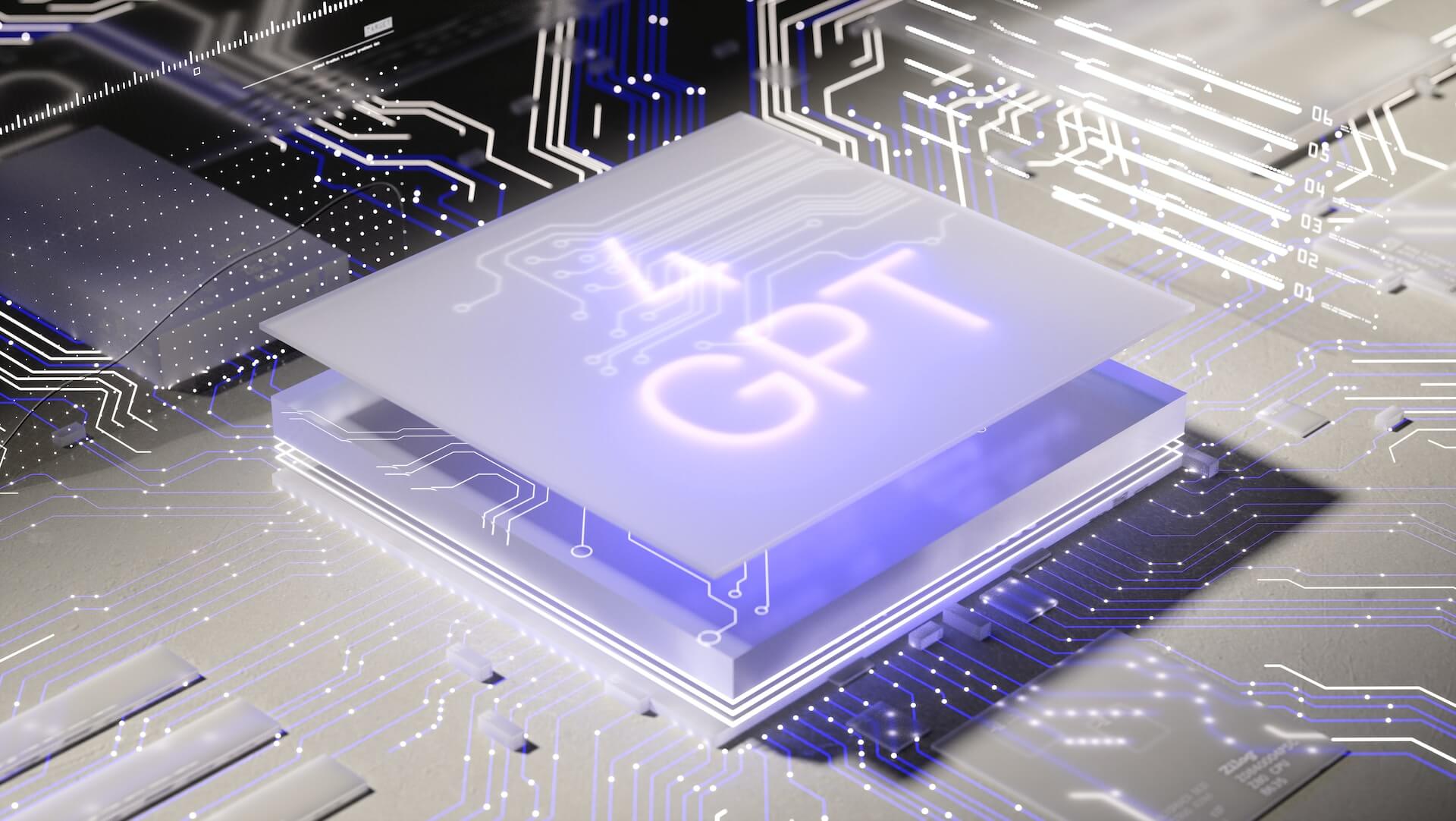
GPT-4 will already design its own chips! One of the oldest problems in the chip design industry, HDL, has been successfully solved by GPT-4. And, the 130nm chip it designed has been successfully flowed.